Passages records the books I'm reading, the live music I'm hearing, and the movies I'm seeing. Every now and then I'll throw in a passage from a book I read a while back or a trailer from a old favorite movie. Occasionally, there is something that simply caught my eye. But most of it is what I'm reading and hearing and watching in real time.

Sunday, January 26, 2014

Longbourn

This, she reflected, as she crossed the rainy yard, and strode out to the necessary house, and slopped the pot's contents down the hole, this was her duty, and she could find no satisfaction in it, and found it strange that anyone might think a person could. She rinsed the pot out at the pump and left it to freshen in the rain. If this was her duty, then she wanted someone else's.

Jo Baker, Longbourn (2013)

Sunday, January 12, 2014

When the white man governs himself that is self-government. But when he governs himself and also governs another man, that is more than self-government -- that is despotism. If the negro is a man, why then my ancient faith teaches me that 'all men are created equal;' and that there can be be no moral right in connection with one man's making a slave of another.

Abraham Lincoln, 1854

Sunday, January 5, 2014

The River Where America Began

By the mid-1670s, a new aristocracy was taking hold in Virginia, especially along the coveted James River waterfront reaches that wedded fertile farmland to a ready stream of ship-laden commerce and communications linking the Old World to the new. Over the next decade alone, a dozen well-placed planters secured royal patents to tracts ranging in size from ten thousand to fifty thousand acres. The rich got richer, moreover, often through insider schemes that manipulated, or outright defrauded the systems of head rights, taxation, custom duties, and land use in the young English foothold in America.

Bob Deans, The River Where America Began: A Journey Along The James

Wednesday, January 1, 2014

L. A. Noir

From the perspective of law enforcement,assaults on police officers were unacceptable, no matter what the circumstances. So the police went back to look for the assailants. Most were picked up immediately and taken to Central Division for booking. Police kicked in the door of the last drinker involved in the brawl, Danny Rodela, at about 4 a.m. They dragged him out of bed, away from his screaming, pregnant wife, all while hitting him with a blackjack. Unfortunately, the men who were now in custody weren't the only people who'd been out drinking. So had a great many police officers of the city of Los Angeles.

John Buntin, L. A. Noir (2009)

Tuesday, December 31, 2013

Burmese Days

Then a single green pigeon fluttered down and perched on a lower branch. It did not know that it was being watched. It was a tender thing, smaller than a tame dove, with a jade-green back as smooth as velvet, and neck and breast of iridescent colors. Its legs were like the pink wax that dentists use.

The pigeon rocked itself backwards and forwards on the bough, swelling out its breast feathers and laying its coralline beak upon them. A pang went through Flory. Alone, alone, the bitterness of being alone! So often like this, in lonely places in the forest, he would come upon something -- bird, flower, tree -- beautiful beyond all words, if there had been a soul with whom to share it. Beauty is meaningless until it is shared. If he had one person, just one, to halve his loneliness! Suddenly the pigeon saw the man and dog below, sprang into the air and dashed away swift as a bullet, with a rattle of wings.

George Orwell, Burmese Days (1934)

Wednesday, November 27, 2013

Dallas 1963

Thousands of people are jumping, screaming, waving. For more than a few, it feels cathartic, as if Dallas is letting something go. As the happy crowds push toward Jack and Jackie, the motorcade slows even more. Secret Service agents jump off the follow-up car and surround the presidential limousine to make sure the president and the First Lady are protected.

The procession is now slowly passing Nieman Marcus. Lady Bird spots a friend of hers who works at the store, and the two women wave gaily at each other. Looming above Nieman Marcus, on the opposite side of the street, is the Mercantile Building. Up on the seventh floor, in the offices of Hunt Oil, the seventy-four year old billionaire is somberly watching the procession from his window. He is flanked by two young secretaries. No one has to say a word. The huge roar from Dallas says it all.

Down on the street, a reporter from the Dallas Morning News nudges one of his colleagues and shouts:

"They've got this town wrapped around their little fingers."

Bill Minutaglio and Steven L. Davis, Dallas 1963

Saturday, November 16, 2013

Partners In Command

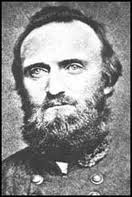
In his own mind,he was conquering evil, but he paid a dear price for victory. Already awkward in the presence of others, [Stonewall] Jackson's intensified internal focus seemed to heighten his eccentricities and distance him further from most people. He was at ease only with God, his wife, and a handful of friends. Ceaseless strife with sin had sucked the youth from him. To strangers, Thomas Jackson appeared much older than his thirty-seven years.

Joseph T. Glaatthaar, Partners in Command: The Relationships Between Leaders in the Civil War

Monday, November 11, 2013

Bring Up The Bodies

It may, even now, be necessary to impress on the boy's imagination the stages on the walk ahead: the walk from the room of confinement to the place of suffering: the wait, as the rope is uncoiled or the guiltless iron is set to heat. In that space, every thought that occupies the mind is taken out and replaced by blind terror. Time falsifies itself, moments becoming days.

Hilary Mantel, Bring Up The Bodies

Sunday, November 3, 2013

The Genius of the System

Warner's released White Heat in the summer of 1949, and neither the critics nor the public knew quite what to make of it. Without a stabilizing narrative force -- a love story, say, or a more appealing agent of law and order -- the viewer is necessarily drawn to the doomed and anarchic Cody. At the film's end, the nominal hero, Edmund O'Brien, pumps one bullet after another into Cody and mutters, "What's keeping him up?" The answer is obvious. It's what kept Robinson up at the end of Key Largo -- that odd logic of stardom and drama and Hollywood myth making, accumulated through decades of films and roles. It's what gave stars like Cagney and Robinson, Davis and Muni, Bogart and Flynn, the power to overcome conflict and loss and even death itself, and to be forever reborn and forever revitalized in another role, another life, another on-screen incarnation.

Thomas Schatz, The Genius of the System: Hollywood and Filmmaking in the Studio Era

Tuesday, October 1, 2013

Tom Jones

A single bad act no more constitutes a villain in life than a single bad part on the stage. The passions often force men upon parts without consulting their judgment. The man may condemn what he himself acts.

Henry Fielding, Tom Jones